
How Much Power Portable Inverter Generator Do I Need for RV?
Selecting the appropriate power output for the generator is crucial for achieving a seamless off-grid experience and avoiding frequent power outages. For most RV travelers, what is needed is not just “electricity”, but the ability to operate some high-power appliances – such as air conditioners and microwave ovens – while not damaging the sophisticated electronic equipment inside the vehicle.
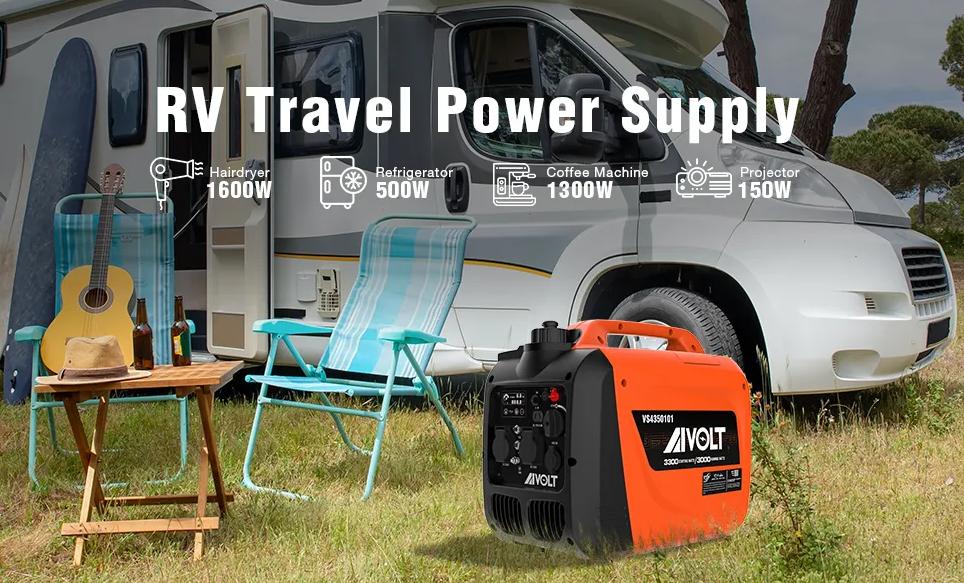
Identify Your Total RV Electrical Load First
To determine your requirements, it is necessary to distinguish between the running power (continuous power) and the starting power (the short-term instantaneous power required to start the motor). For most RV electrical appliances with compressors or motors – especially air conditioners and refrigerators – the power required for startup is 2 to 3 times that of their running power.
If you ignore the starting power, when the air conditioner compressor starts, the generator may immediately overload.
The following table is the benchmark for standard recreational vehicle equipment in 2026:
| RV Appliance | Running (Rated) Watts | Starting (Surge) Watts |
| RV Air Conditioner (13,500 BTU) | 1,500W | 2,800W – 3,000W |
| RV Air Conditioner (15,000 BTU) | 1,800W | 3,300W – 3,500W |
| Microwave Oven | 1,000W | 1,500W |
| Coffee Maker | 1,000W | 1,000W |
| Refrigerator (RV Style) | 200W | 600W |
| Starlink Gen 3 Kit | 75W | 100W |
| Laptop / Mobile Workstation | 60W – 100W | 100W |
| LED Lighting (Total) | 50W | 50W |
Always check the data plate on your specific A/C unit. Newer high-efficiency models or those equipped with a “Soft Start” kit can significantly reduce starting watt requirements, potentially allowing a smaller 2000W-class generator to handle a 13,500 BTU unit.
Use This RV Appliance Power Consumption Chart
Determining your power budget is an arithmetic procedure. To prevent “stacking” loads that will exceed your generator’s capability, use this three-step approach employed by professional electricians:
Formula:
(Highest Starting Watts of a Single Appliance) + (Total Running Watts of all other simultaneous loads) = Your Minimum Generator Size
Sample Calculation:
Let’s assume that you wish to turn on your 13,500 BTU air conditioner, turn on the lights, and plug in your laptop when working from home.
- Maximum Starting Watts: Your air conditioner is at 3,000W.
- Additional Running Watts: LED Bulbs (50W) + Laptop (100W) + Starlink (75W) = 225W.
- Total Load: 3,000W + 225W = 3,225W.
In this situation, a 2000W generator will fail. You would need a unit rated for at least 3500 Starting Watts to ensure the A/C can cycle on while the other electronics are active. If you intend to use the microwave while the A/C is running, you must add another 1,000W to that total, pushing you into the 4500W+ category.
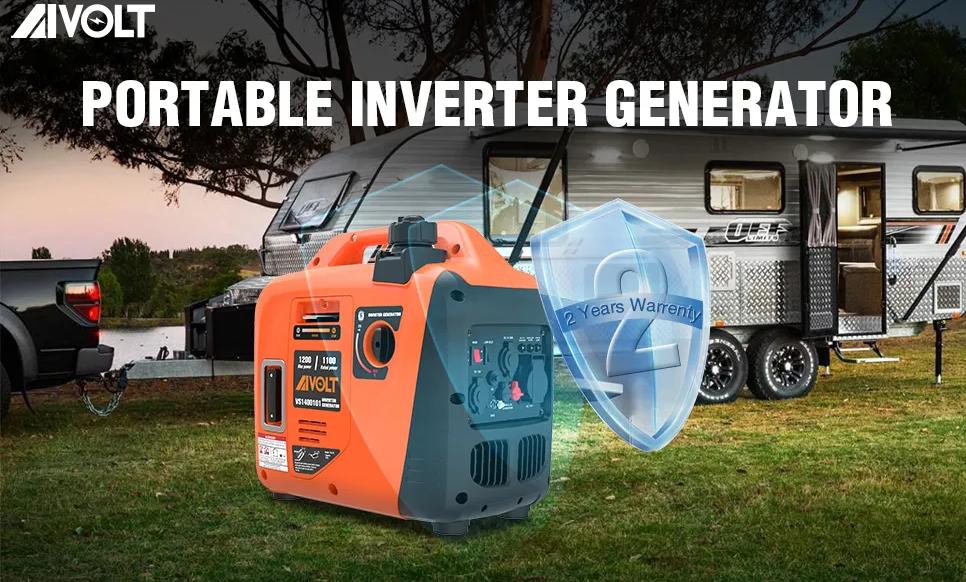
Choose the Best Wattage Range Based on Your Lifestyle
No single type fits all users. The selection will depend on your “Power Profile,” which determines what you are ready to trade off for portable and economical generators.
The Minimalist (1600W – 2000W range)
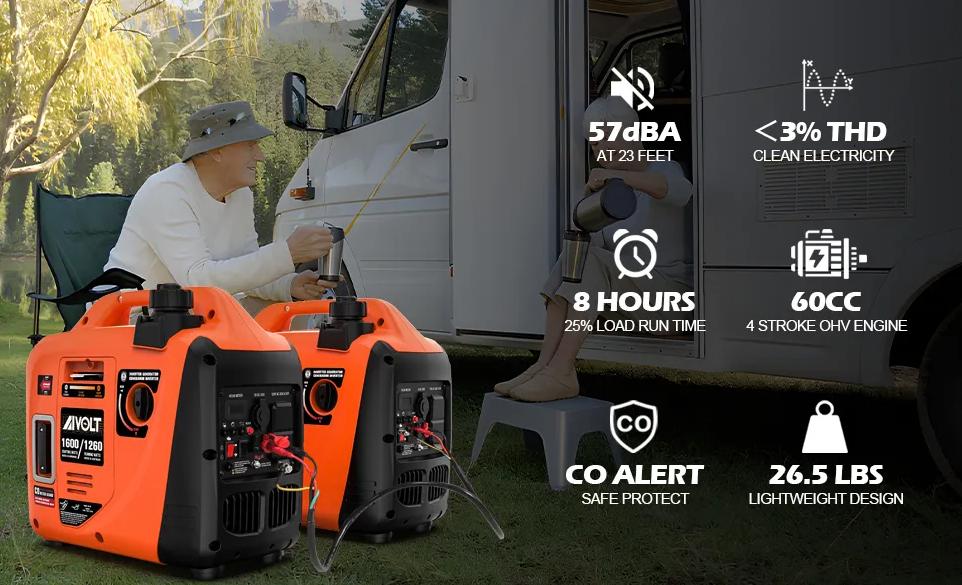
A perfect choice for “boondockers” without any need for air-conditioning. The 2000W class inverter generators are relatively lightweight and can be carried using only one hand. Such generators will have no problems providing power to your lighting, water pump, furnace blower, and entertainment system. In addition, they are the most economical to run, usually operating up to 8-10 hours per gallon of fuel.
Comfort Camper (3000W – 4500W Range)
These 3000W – 4500W generators fall into the “Sweet Spot” for most RV owners in North America. Such a machine can power up a 15,000 BTU A/C system and allow some margin for cooking coffee and drying hair. They normally come with wheels and telescopic handles since their weight ranges between 80 and 120 lbs.
Heavy Users (Parallel Capable Generators)
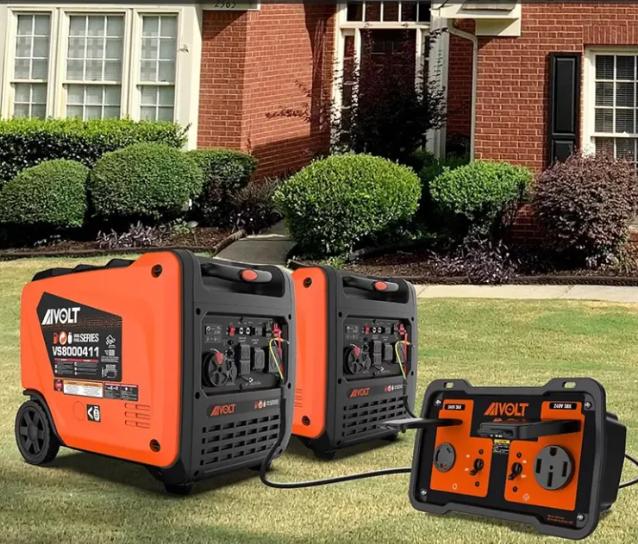
If you own a 50-amp RV with dual air conditioners, one portable generator will not suffice. The expert way is to purchase two 2000W and 3000W machines and connect them with a Parallel Kit. You will achieve your desired output capacity to power up heavy machinery, while you could keep one unit at home when traveling lightly.
Optimize Performance With Inverter Technology and Parallel Connection
As an inverter generator supplier, we stress that the power transmission mode is as important as the amount of power.
The role of clean electricity (THD)
The electricity generated by traditional “open-type” portable generators is “not pure” and has a high total harmonic distortion (THD). This can cause malfunctions in the control panels of modern RVs and may permanently damage the sensitive power adapters of MacBook or Starlink routers. Inverter generators convert the original AC into pure sine waves, with the THD typically below 3%. If you are still working in your RV in 2026, then an inverter is essential to protect your digital assets.
Efficiency and Quieter Running
Inverter generators employ “Smart Throttle.” While regular generators operate continuously at 3,600 RPM irrespective of the demand, inverter generators adjust their engine speed based on the current load demand. The advantages include:
- Decibel Reduction: Necessary to meet the maximum 60dB restrictions imposed by numerous National Parks in the United States.
- Engine Life Extension: Minimized engine component wear under low-demand conditions, such as night charging sessions.
Parallel Advantages
In case you prefer portability, then it’s recommended to find “Parallel Ready” units. This means that two small generators can be connected, resulting in the power required to start A/C at 4000W, and yet, it will make it easy to transport the generator by carrying both of them separately. Plus, it adds a backup generator.
Final Selection Check List
Three final considerations before purchasing:
- What is the peak surge of my largest motor? (Usually the A/C).
- Can I physically lift the unit? (If not, prioritize wheels or a parallel setup.
- Is the THD low enough for my laptop? (Look for <3% THD ratings).
Matching your generator’s power with the peak surge of your needs guarantees reliable operation to protect your gear and get the most out of your trips. Discover the generator that works best for your RV from our new line of 1600W to 4500W Portable Inverter Generator for RVs series.