
Can Electric Pressure Washers Finally Replace Gas Models?
For years, “electric pressure washer” was code for “the weaker option” — fine for a bike or a patio chair, but not something you’d trust with a driveway full of years-old grime. That reputation is starting to look outdated. In 2026, electric models are hitting pressure ratings that used to be gas-only territory, closing a gap that once felt permanent. The short answer: for most homeowners, yes — electric can now replace gas. For a few specific jobs, gas still has an edge, and knowing which camp you fall into makes the decision easy.
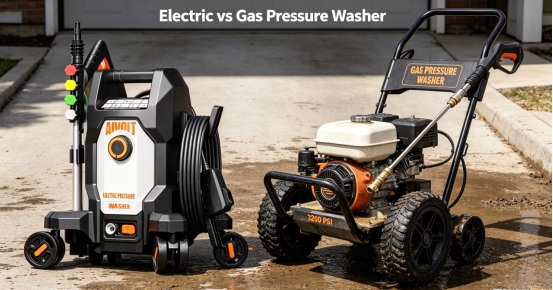
Why Electric Used to Lose to Gas
The skepticism around electric pressure washers wasn’t unfounded — it was earned. Older corded models typically topped out around 1,500–2,000 PSI, enough for a car or some patio furniture but not much else. As a group, gas pressure washers have historically been more powerful than electric machines, which is why they became the default choice for heavy-duty jobs like restoring a long-neglected deck or patio. Electric units earned a reputation as the “starter” option — easy to use, but not something serious cleaners reached for.
What’s Actually Changed in Electric Pressure Washer
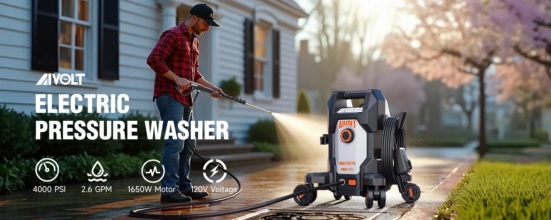
That gap has narrowed considerably, largely thanks to motor and pump engineering catching up to demand. Higher-wattage motors spinning at higher RPMs are now pushing electric units into pressure ranges once reserved for gas engines. The AIVOLT Electric Pressure Washer 5000PSI is a useful example of where the category has landed: it’s built around a high-performance 1650W motor spinning at 8850 RPM, rated for a maximum pressure of 4000 PSI, with lab-tested surge pressure reaching as high as 5000 PSI. That’s worth being precise about — 4000 PSI is the sustained, rated output; 5000 PSI reflects a brief lab-tested peak, not a number you should expect during continuous use. Even the conservative 4000 PSI figure, though, puts modern electric units solidly in territory that used to belong to gas alone.
This shift isn’t just about peak numbers — it’s about consistency. The same unit is designed to maintain consistent pressure even during extended use, rather than fading under sustained load, a common complaint with older electric models.
Head-to-Head: Electric vs. Gas
| Factor | Electric | Gas |
| Rated Pressure | Up to 4,000 PSI (peaks near 5,000 PSI) | Higher on large commercial units |
| Startup | Instant push-button start | Choke, pull cord, warm-up |
| Runtime | Unlimited (plug-in) | Unlimited (as long as fueled) |
| Noise | Noticeably quieter | Loud, hearing protection recommended |
| Maintenance | Minimal — no oil or fuel | Regular oil changes, engine upkeep |
| Safety | No exhaust or carbon monoxide risk | CO risk in enclosed or near-window use |
| Mobility | Limited by cord length (36 ft) and outlet access | Fully untethered |
| Cost | Comparable upfront, lower running cost | Lower upfront, ongoing fuel cost |
The pattern is clear: electric wins on convenience, safety, and day-to-day cost; gas still wins on total independence from a power source.
Where Gas Still Has the Edge
To be fair, gas isn’t obsolete. If you’re pressure washing for a living — multiple driveways, commercial lots, or hours of concrete cleaning in a single day — gas engines still offer an edge in sustained, all-day output without needing to stay near an outlet. Anyone working far from a power source, like a rural property or a job site with no easy access to electricity, will also find gas more practical simply because of the cord-length limitation electric units share.
The Verdict: Who Should Actually Switch?
For the vast majority of homeowners — washing a car, a deck, a driveway, patio furniture, or siding — electric has caught up enough that the tradeoff barely exists anymore. You get comparable pressure, none of the fumes or oil changes, and a machine that starts the moment you pull the trigger. If you’re a professional running multi-hour jobs across job sites without outlet access, gas (or a hybrid battery/electric setup) is still the more practical tool. But for everyday residential cleaning, 2026 is a reasonable year to make the switch.
What to Look For If You’re Making the Switch
A few specs matter more than the PSI number alone:
- Rated vs. peak pressure — always check both. A “5000 PSI” headline number is meaningless if you don’t know the sustained rating behind it.
- Flow rate (GPM), not just PSI — pressure alone doesn’t rinse debris; flow rate does the actual clearing work.
- Safety certifications — look for GFCI protection and auto-shutoff features. The AIVOLT 5000PSI unit, for example, includes integrated GFCI leakage protection and an auto-shutoff Trigger Safety System that protects the pump from dry-running damage, along with an IPX5 waterproof body
- Cord and hose reach — since electric units are tethered, check both the power cord and hose length before assuming it’ll reach your whole driveway.
If you’re ready to see what a modern electric option looks like in practice, the AIVOLT Electric Pressure Washer 5000PSI is built around exactly these upgrades — rated power, safety features, and consistent output under load.
Electric pressure washers haven’t just improved incrementally — they’ve genuinely closed the gap that used to justify choosing gas by default. For most home cleaning tasks, the tradeoff isn’t power anymore; it’s simply whether you need to work untethered from an outlet. For everything else, electric is now a legitimate, not a compromise, choice.
FAQ
Rated PSI represents the level of pressure a machine will endure during normal usage, and the peak PSI is a short laboratory-tested maximum, but it isn’t indicative for continuous use.