
How to Parallel Two Portable Inverter Generators for Double the Output?
Whether it’s running the air conditioner in a vehicle, operating heavy-duty electric tools on a construction site, or ensuring the power supply for household appliances during a power outage caused by a storm, small portable generators often fall short. However, if one directly upgrades to a high-power open-type generator of 4000 watts or more, one has to sacrifice portability, noise reduction performance, and fuel efficiency.
In fact, connecting two inverter generators in parallel is a more practical and flexible alternative solution.
By connecting two lightweight inverter generators through a dedicated parallel kit, the rated power and peak startup power can be doubled when needed. This guide will systematically explain to you the advantages of parallel power generation, safety regulations, standardized installation procedures, and common troubleshooting solutions.
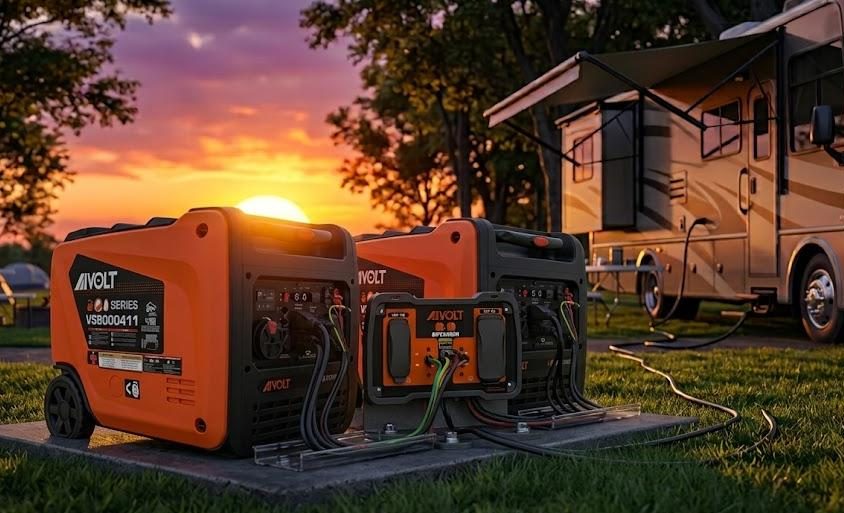
Table of Contents
Why Parallel Two Generators Instead of Buying One Big Unit?
For many outdoor enthusiasts, campervan owners and household users, connecting two inverter generators in parallel is often a more practical choice compared to using a single high-power generator directly. The specific advantages lie in the following aspects:
- Easy transportation and high portability
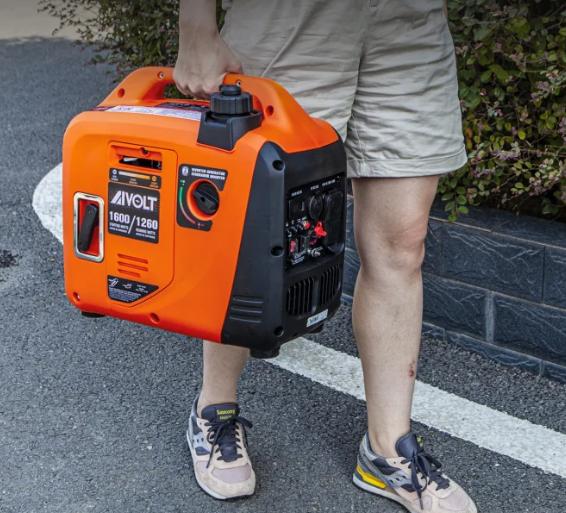
A traditional open-type generator with a power of 4000W to 5000W usually weighs up to 100 to 150 pounds (about 45-68 kilograms). It is very difficult for a single person to load it onto a truck bed or a camper storage compartment by themselves. In contrast, an inverter generator of the 2000W level weighs only 40 to 50 pounds (about 18-23 kilograms), and it is much easier to transport it separately in two stages.
- Achieve flexibility while achieving better fuel economy
In daily use, full power output is not always necessary. If all that is needed is to charge the phone, power the LED lighting, or keep the small refrigerator running, just turning on one generator will suffice, which can significantly save fuel and reduce noise levels. When the RV air conditioner or high-power equipment needs to be started at night, the second generator can be connected at any time to replenish the power.
3. Equipped with power redundancy guarantee
When relying on a single large generator, if the equipment fails or is shut down for maintenance, there will be a risk of complete power outage. By adopting the dual-machine parallel operation scheme, even if one machine is in maintenance mode, the other can still continue to operate, ensuring the continuity of basic power supply needs.
Read more: Parallel vs Single Big Inverter Generator: Which Is Better?
Essential Requirements Before Paralleling Generators
Before connecting any device, please ensure that your generator configuration meets the following four core standards:
- For inverter generators only: Ordinary open-type generators cannot be directly connected in parallel. Inverter generators are equipped with a digital control module, which enables electronic synchronization to output sine wave signals; while traditional generators lack such control logic, and forced parallel connection is very likely to cause short circuits or severe equipment damage.
- Equipped with dedicated parallel interface: Both control panels of the two generators must have the original factory-preferred dedicated parallel ports (Parallel Ports).
- Brand and model compatibility: In order to ensure the best performance and safe operation, it is recommended to use the same brand and model of equipment. Although some brands support the connection of different power ratings within the same series, using devices of the same specification can ensure a more stable load balancing.
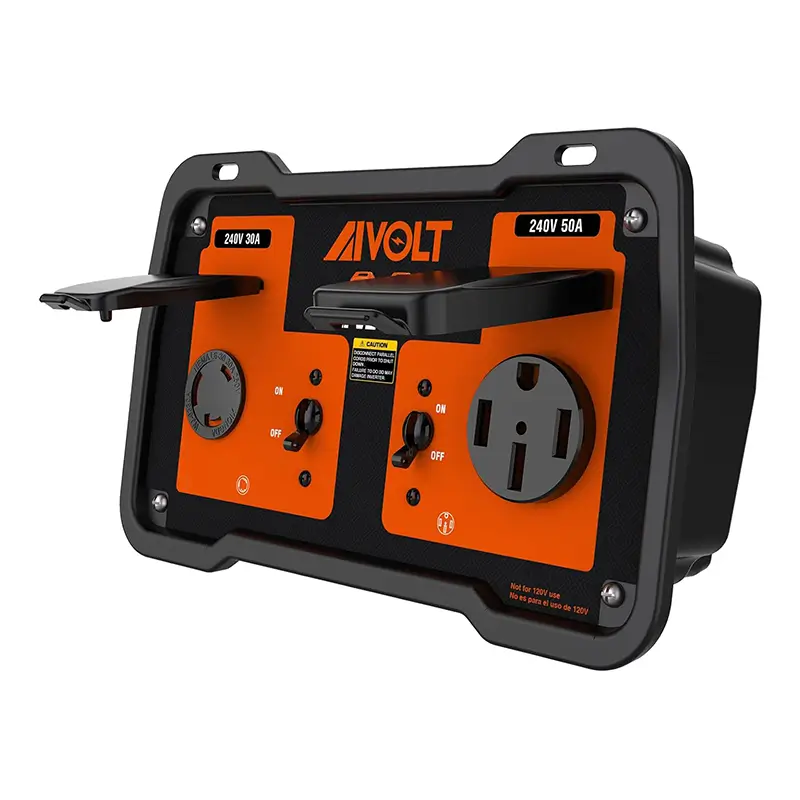
- Use qualified special parallel kit: it is strictly prohibited to make or use simple jumper wiring. They must be paired with original factory or qualified dedicated parallel kits. These kits should be equipped with heavy-duty wires, matching circuit breakers, and standard high-power sockets (such as the TT-30R or L14-30R sockets suitable for RVs).
- Regarding clean electricity: Please ensure that your inverter generator can output pure sine wave power with a total harmonic distortion (THD) of less than 5%. In this way, even in the case of double parallel power, it can safely power sophisticated electronic devices such as laptops, smart phones and smart TVS.
Step-by-Step Guide: How to Connect Two Inverter Generators
Please follow the following standardized steps to safely connect and start your parallel generator system:
Step 1: Shutdown arrangement and safe positioning
Turn off both generators completely and confirm that the engine switches are all in the “OFF/STOP” position.
Place the equipment steadily on an open outdoor surface, keeping it away from doors, windows and ventilation openings.
Maintain an appropriate distance between the two machines, ensuring that the exhaust ports face outward, and avoid pointing them towards another device or personnel activity area.
Step 2: Connect the parallel kit
Fix the grounding wires (green cables) of the parallel assembly to the grounding terminals of the two generators respectively.
Insert the parallel power cables precisely into the corresponding red and black parallel interfaces on the control panel of Generator A.
Insert the power cable on the other side into the corresponding interface of Generator B.
Important Note: The connection of all parallel cables must be completed before the engine is started.
Step 3: Start the devices one by one
Start generator A according to the standard procedure. Let it idle and preheat for 1 to 2 minutes. Wait until the green output indicator light on the panel remains constantly on.
Start generator B and make it operate smoothly.
Check the control panels of the two devices to ensure that the operating indicators are normal and there are no overload alerts.
Step 4: Connect the load equipment
Insert the power cables of high-power appliances or the main power lines of the house directly into the output sockets on the parallel connection kit. Do not insert them directly into the independent sockets of the single generator itself.
Safety Rules & Common Pitfalls to Avoid
To protect the equipment and sensitive electronic components from damage caused by voltage spikes or short circuits, please follow the following core safety guidelines:
- It is strictly prohibited to parallel traditional open-type generators: Non-inverter generators lack the electronic sine wave synchronization function. Without a dedicated external synchronization control device, forcibly paralleling them can easily cause serious electrical fires or even completely burn out the generator.
- Strictly control the load limit of the parallel unit: The total operating power and the starting peak power must not exceed the rated capacity limit of the parallel unit or the maximum output power of the combination of the two generators.
- Before shutting down, the load must be disconnected: After use, all electrical equipment connected to the parallel kit should be turned off and unplugged first, and then the generator engine should be turned off one by one.
Frequently Asked Questions (FAQs)
Question 1: Can two generators with different power ratings be connected in parallel?
Answer: Yes, provided that both devices are inverter generators and the original manufacturer explicitly supports mixed connection of different power levels. However, connecting two devices of the same model in parallel is still the best option, as it ensures better load balance, similar fuel consumption performance, and synchronized engine wear.
Question 2: When generators are connected in parallel, will the voltage or the current double?
Answer: In the parallel mode, the output voltage remains constant (such as 120V), while the output current doubles. According to the power calculation formula (power = voltage × current), doubling the current means that the total output power also doubles.
Question 3: Can traditional generators and inverter generators be connected in parallel?
Answer: Absolutely not. Traditional generators lack the function of digital sine wave synchronization. Connecting a traditional generator in parallel with an inverter generator would result in circuit short-circuiting, severe damage to the equipment, and even cause safety accidents.
Question 4: Are power supplies with parallel output safe for precision electronic devices such as laptops and mobile phones?
Answer: It is extremely safe. Even when the two inverter generators are connected in parallel, they can still maintain a pure sine wave output, and the total harmonic distortion (THD) is controlled within 5%, which will not damage laptops, smartphones or any other precision electronic devices at all.
Upgrade Your Power Setup with AIVOLT
For users who need to switch flexibly between camping outdoors, mobile operations and household emergency backup power sources, generator parallel connection is undoubtedly the best solution that combines high power output with portability.
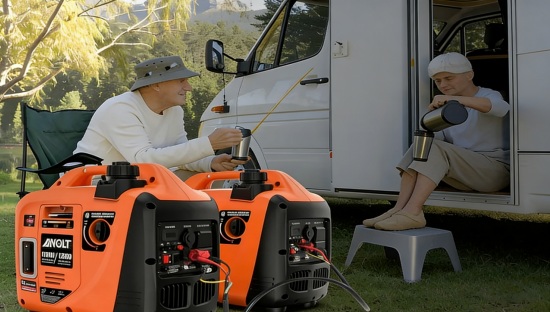
The AIVOLT portable inverter generator is natively equipped with parallel functionality. It not only can output pure sine waves with THD < 5% (low distortion), but also has excellent silent performance. Simply connect two compact AIVOLT inverter generators through the official parallel kit, and you can unlock double power output at any time without sacrificing the portability of a single unit.
Please refer to the entire series of inverters and official parallel kits of AIVOLT. Based on your electricity usage requirements, you can build a flexible and efficient portable power system.