
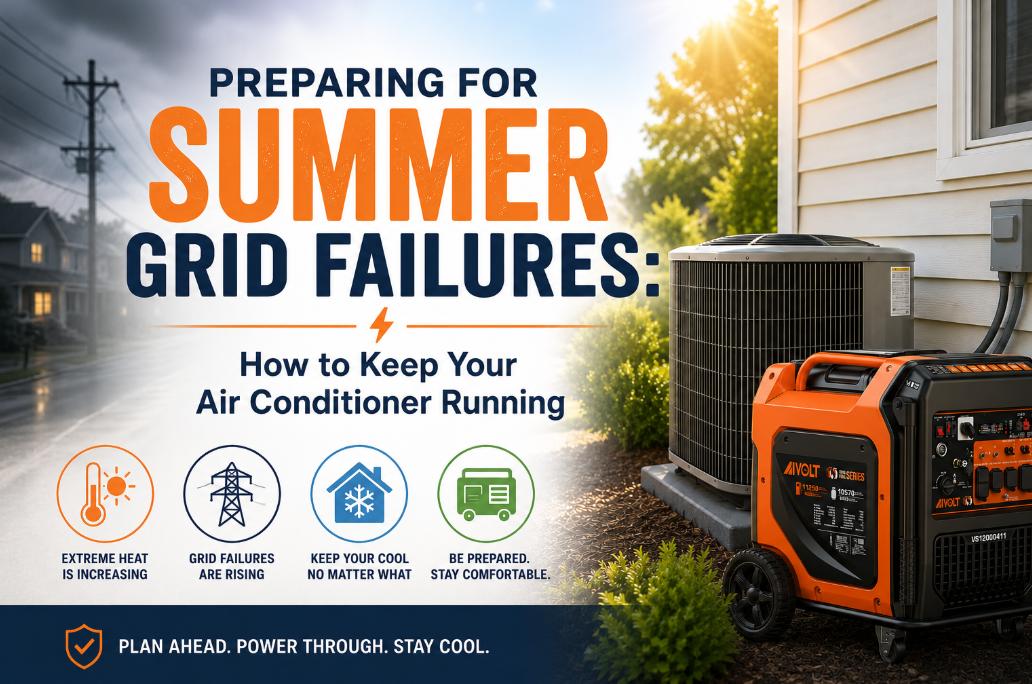
Preparing for Summer Grid Failures: How to Keep Your Air Conditioner Running
During the 2026 hot summer months, high temperatures persistently rage on. Every household turns on its air conditioners at full capacity, which can easily overburden the transformers and cause them to malfunction, resulting in local power outages.
During hot weather, power outages cause more than just inconvenience to people. When the air conditioner is turned off, the room will become extremely hot within a few hours. This is a great challenge for the elderly and pets who are already weak. What’s worse, once the refrigerator loses power, the food inside will go bad within a day. In the face of the increasingly hot summer, completely leaving the control of room temperature to the public power grid is clearly no longer a reliable solution.
Understanding AC Wattage: Running vs. Starting Watts
The prerequisite for successfully powering the air conditioner with the backup power supply is to understand its power consumption characteristics. When the air conditioner compressor starts, it requires an extremely high instantaneous current, so two key data points need to be measured:
- Operating (rated) power: The power consumption that remains stable and continuous after the device is turned on.
- Startup (surge) power: The instantaneous peak power required by the compressor to overcome inertia and start the refrigeration cycle.
| Air Conditioner Type | Average Running Watts | Average Starting (Surge) Watts |
| Window AC (10,000 BTU) | ~1,200W | ~2,200W |
| Portable AC (14,000 BTU) | ~1,500W | ~2,900W |
| Central AC (3-Ton System) | ~3,500W | ~8,000W – 10,000W |
Note: For large central AC systems, installing a standard aftermarket “soft starter” can reduce the required starting current by up to 60-70%, allowing smaller generators to manage the load safely
Emergency Backup Solutions for Partial Cooling
If you only need to cool a single bedroom or home office and ensure the normal power supply for the refrigerator, an intermediate power inverter generator is an ideal choice that balances portability with high power output.
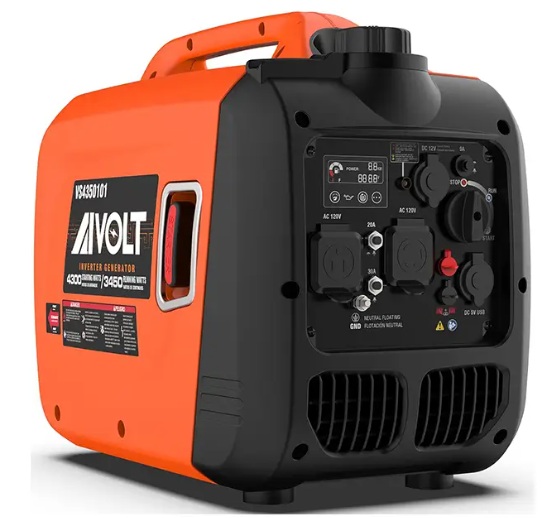
The AIVOLT 4300W inverter generator can easily meet these requirements. Unlike ordinary open-type generators, it adopts advanced inverter technology, with the total harmonic distortion (THD) of its output being lower than 5%. This stable and pure sinusoidal green electricity can safely power machine-used servers, medical equipment, and various high-end household appliances, and there is no need to worry about the electrical appliances being damaged by the current. Moreover, its silent design is also very suitable for use as an emergency backup in residential areas with noise control regulations.
Whole-House Power Security via Dual-Fuel Generation
If you want the central air conditioning and all the household electrical appliances in your home to continue operating normally even when the power is cut off, a high-power, multi-functional emergency generator is indispensable.
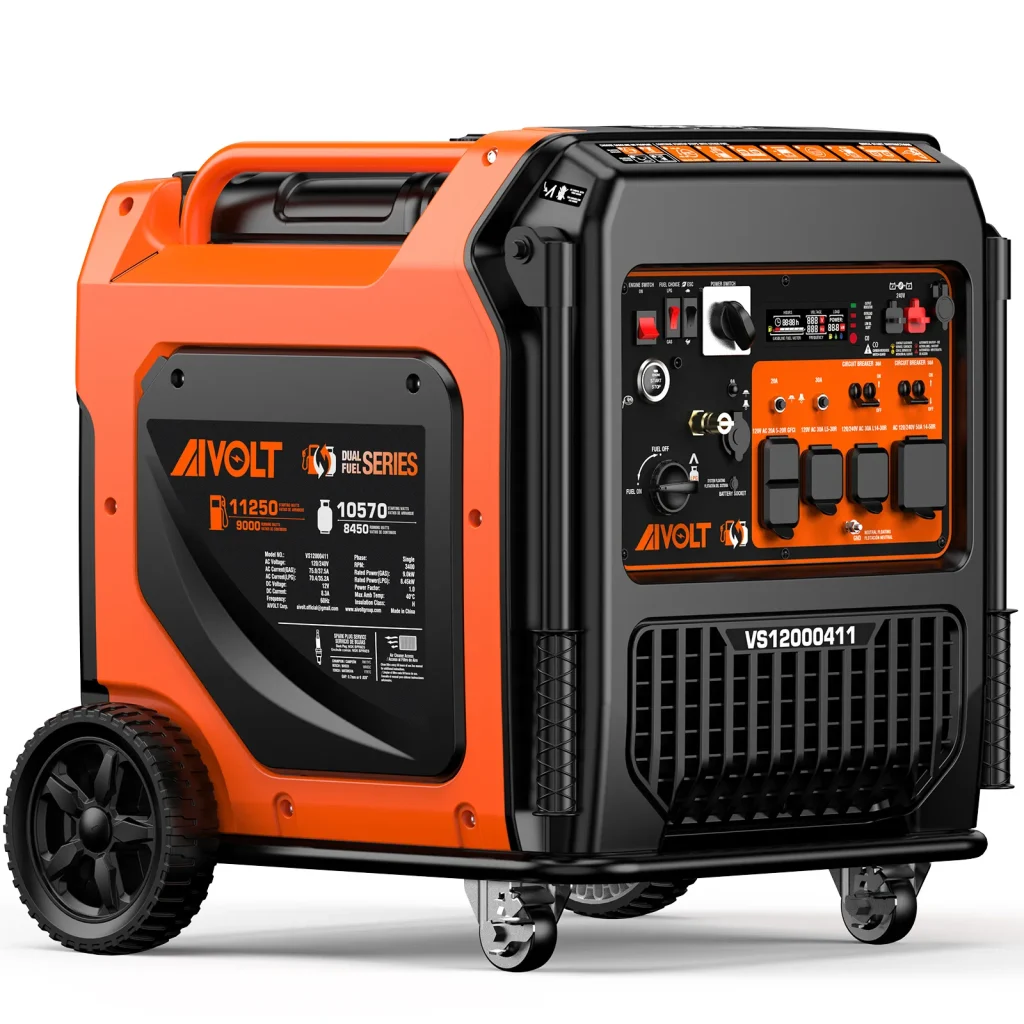
The AIVOLT 11250W dual-fuel portable generator can easily handle the high load of air conditioner operation. Its most notable feature is the “dual-fuel” design. During severe power grid failures in summer, gasoline is often hard to obtain, and gas stations may close due to power outages. In such cases, propane (liquefied petroleum gas) becomes a perfect emergency substitute. Propane not only has a long shelf life but can also be stockpiled at home without worrying about supply disruptions. With this double guarantee, even during prolonged hot summers, the cooling system at home can operate stably.
Essential Safety Protocols for High-Heat Operation
During heat waves, strict implementation of safety and maintenance protocols is key to stable generator operation, especially during peak periods:
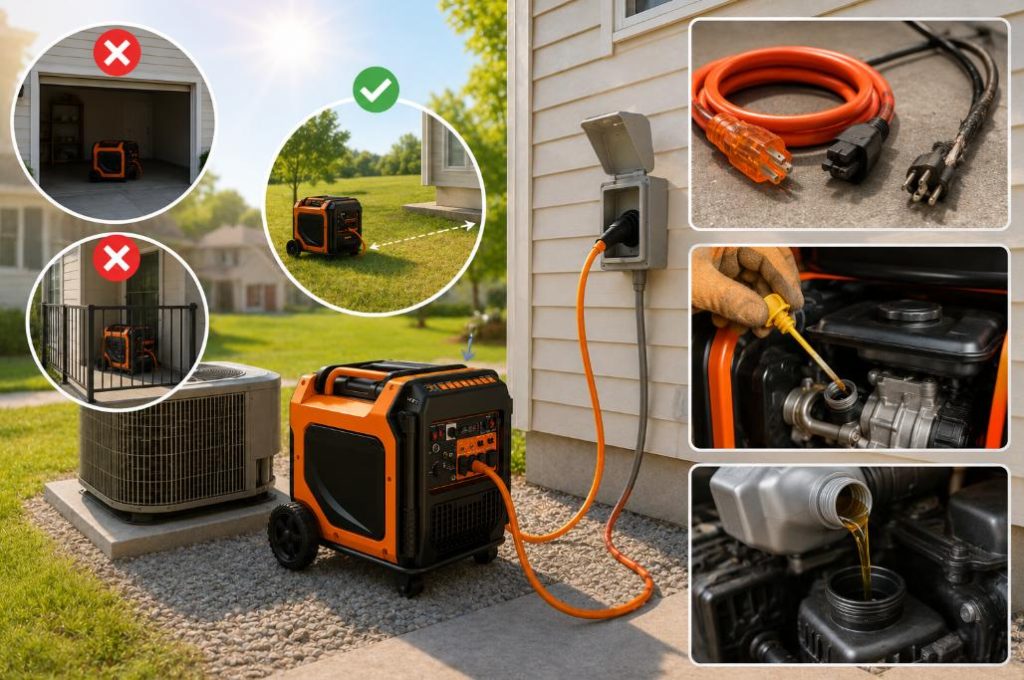
- Location and Ventilation: Do not operate the generator in a garage, basement, or enclosed balcony. The generator should be placed outdoors in a well-ventilated area and kept at least 6 meters (20 feet) away from the building to prevent the accumulation of carbon monoxide.
- Power transmission: When powering high-power equipment such as air conditioners, ordinary household extension cords are easily damaged or caused by overheating or a voltage drop. Please be sure to use 10 or 12 gauge heavy-duty outdoor-specific power cords.
- High-temperature maintenance: High temperature and high load will accelerate oil deterioration. When using the engine for a long time in summer, please regularly check the oil level with the oil dipstick, and it is recommended to use 10W-30 engine oil to prevent the engine from seizing or seizing due to insufficient lubrication.
Conclusion
The summer heatwave of 2026 is set to reach its peak in July. At this point, relying solely on the overburdened public power grid is clearly no longer safe enough. Extreme weather and sudden power outages are becoming increasingly frequent, and power security must come before power outages. Once a crisis occurs, the likely outcome could be a passive situation where goods cannot be delivered in full and logistics are severely delayed.
Whether your location requires an inverter generator for cooling the core area and being quiet and portable, or a large-capacity dual-fuel system capable of powering the entire house’s central air conditioning, it is now the right time to assess the actual power requirements.
By choosing the appropriate backup power supply based on the budget and layout in advance, you can ensure the stable operation of your business and the comfort of your life during the most unstable months of this year.