
How to Hook Up Portable Generator to Your House?
Imagine that the sky is turned charcoal gray, the wind starts to howl,and suddenly—silence. The lights fade and disappear. In a time of growing unstable grids and severe weather conditions, a portable generator is no longer an option but a necessary lifeline. But the fact that you have a generator is half the fight. Understanding how to hook up portable generator to your house without running the risk of an electrical explosion or risking utility workers is the real issue.
Just take it easy, we will go together through the safest, quickest, and most economical ways to power up the house and make sure your loved ones are warm, fed, and safe until the grid comes back.
Can You Connect a Portable Generator to Your House?
The answer is YES. However, it’s the “how” matters more than the “if.” Connecting a generator isn’t quite as straightforward as plugging it in to an outlet on the wall. Actually, this technique called “backfeeding”–is an example of one the biggest errors that homeowners make.
Backfeeding can send electricity to the wrong way, and it travels through your home and onto the nearby power lines. This could lead to electrocution of people working for utilities who try to fix the grid. In addition, it will bypass the circuit breakers in your home which creates a major risk of fire. To be safe and legally compliant you should make use of a specific system to isolate you generator from power grid.
The positive side? Secure solutions are available to minimize these dangers, which are what we’ll explain below.
Things You Need Before Connecting a Portable Generator
Essential Equipment
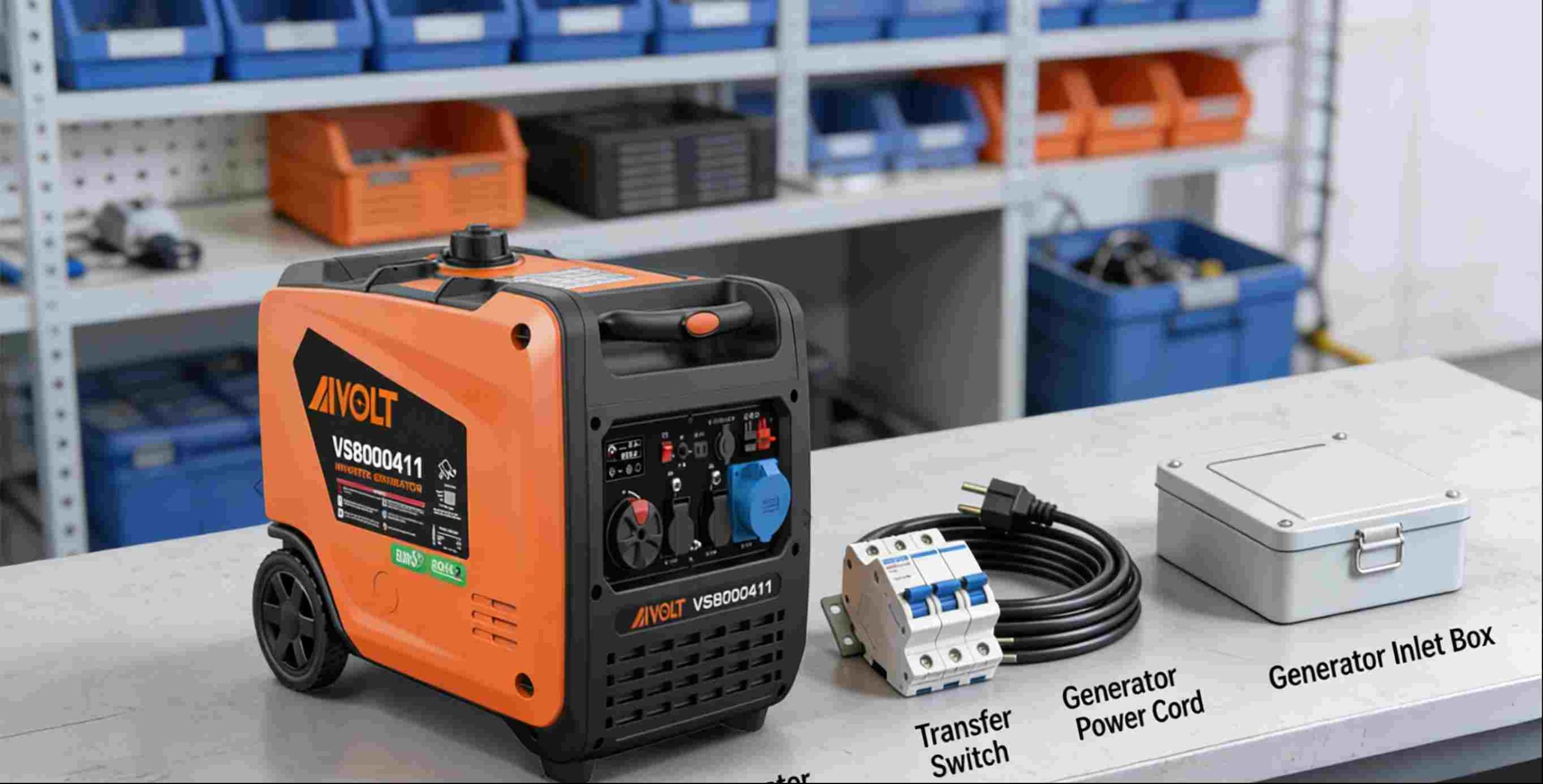
1.Portable Generator
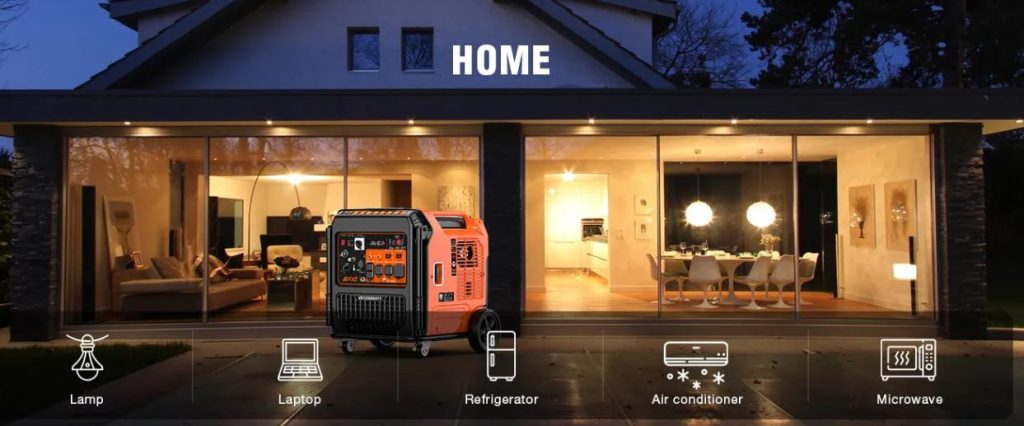
Get one that has enough wattage for your purpose. For instance, a small house would need a generator that can provide 3,000-5,000 watts, meanwhile, a bigger house might need 7,500 watts or even more.
2.Transfer Switch or Interlock Kit
These devices are able to isolate your house from power grid when the generator is in use.
3.Generator Power Cord
A robust outdoor-rated cable specifically designed for connections to generators.
4. Generator Inlet Box
An outdoor weatherproof socket that ensures a secure connection between the generator and the electrical panel.
Optional but Recommended
- Surge Protector – protects sensitive electronics
- Carbon Monoxide Detectors – essential for a timely warning
- Generator Covers or Canopies can be used to ensure safe outdoor operation in the rain
3 Safe Methods to Connect a Portable Generator to Your House
Method 1 – Transfer Switch (Favorite)
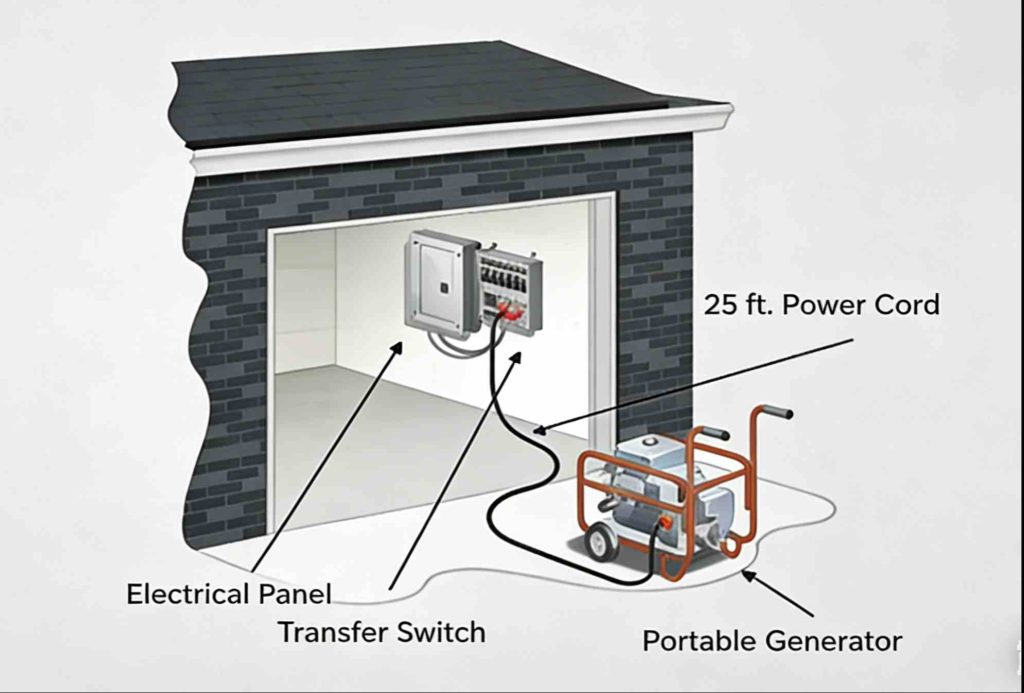
A transfer switch is an exclusive electrical panel that allows you to choose which circuits are supplied with power from the generator.
The switch severs the connection between your house and the power company, then it connects the house to the generator behind the switch.
Advantages:
- The safest and the most reliable way
- Complete adherence to electrical codes
- Allows some circuits (fridge, lights, heating) to operate
Disadvantages:
- More expensive to buy and install
- Usually needs a professional installer
Best for: People who want to have a permanent, code-compliant, and reliable power supply.
Method 2 – Using an Interlock Kit
An interlock kit provides a connection with the main electrical panel and ensures that the main breaker and generator breaker at no time will be in an on state simultaneously.
Pros:
- Less costly than a transfer switch
- Allows circuits to be supplied with power
- More secure compared to areas where extension cords are used
Limitations:
- Needs electrical panel compatible with it
- May require permits based on the location where it will be set up
Compliance: Usually permissible, but it is necessary to check for local codes since they have differences—always do that before the installation.
Method 3 – Extension Cords (Temporary Solution)
The method used in this situation is to utilize heavy-duty extension cords for the direct unplugging and plugging of the appliances into the generator.
Best for:Temporary outages, Small appliances (refrigerators, lights, fans)
Drawbacks:
- Limited reach and convenience
- No whole-house power
- Trip hazards and clutter
This is a temporary solution, not ideal for long-term use.
6 Steps to Hook Up Portable Generator Utilizing Transfer Switch
Step 1 – Main Power Off
Utility main breaker must be turned off to make your house unconnected to the grid.
Step 2 – Generator Outdoors Positioning Safely
The generator should be placed outdoors, at least 20 feet away from the house and also from windows and doors. It should never be operated indoors or in a garage, to prevent carbon monoxide poisoning.
Step 3 – The Generator hook up with Inlet Box
A generator-rated power cord should be used to connect the generator outlet to the inlet box.
Step 4 – The Generator Turning On
The manufacturer’s instructions for starting up the device must be followed. The generator should be allowed to stabilize before the load is applied.
Step 5 – Energizing Selected Circuits
With the help of the transfer switch, only the necessary circuits should be enabled. Generators should not be subjected to overloading conditions.
Step 6 – Utility Power Restoration in a Safe Way
When the power comes back, switch off the generator circuits, turn the generator off, unplug the cord, and switch back to the power company.
What NOT to DO When Connecting a Generator!
❌ A “double male” plug must never be used
❌ Backfeeding: never plug a generator into a wall outlet
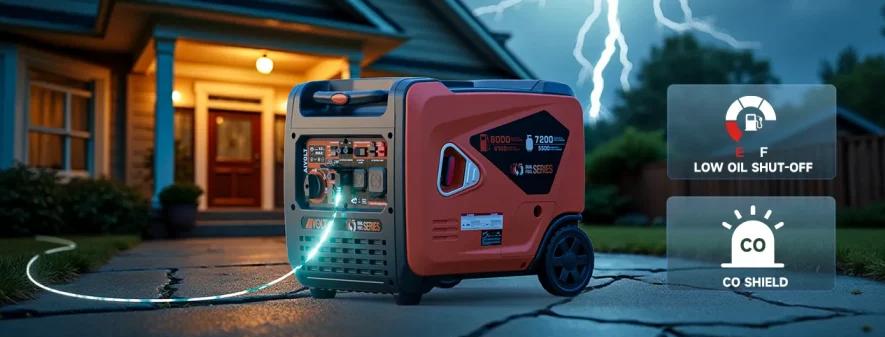
❌ Indoor generator operation or in a garage is a big no-no
❌ Do not run the generator more than its rated capacity
These errors account for the majority of injuries and deaths related to the use of generators. Proper procedure safeguarding lives and property.
No matter if you pick a transfer switch, interlock kit, or a temporary extension cord setup, safety and compliance must come first in any case. With the correct portable generator and by following trusted steps, you’ll get reliable backup power without the risk of your house or family. Today’s preparation means that you have the peace of mind when the next outage occurs.