
How to Use Pressure Washer to Clean Concrete Effectively and Safely?
The process of cleaning concrete is commonly thought of as a simple process of “spraying water,” yet the porous nature of the material requires a precise balance of pressure and volume to prevent damage to the material. The material is a combination of cement, aggregate, and sand. Too much pressure will damage the “cream” layer, which is the smooth finishing material on the surface, causing permanent damage. Too little pressure will not reach the contaminants within the pores of the material.
To obtain a professional cleaning job, a precise balance of pressure washer PSI (Pounds per Square Inch) and GPM (Gallons per Minute) must be used.
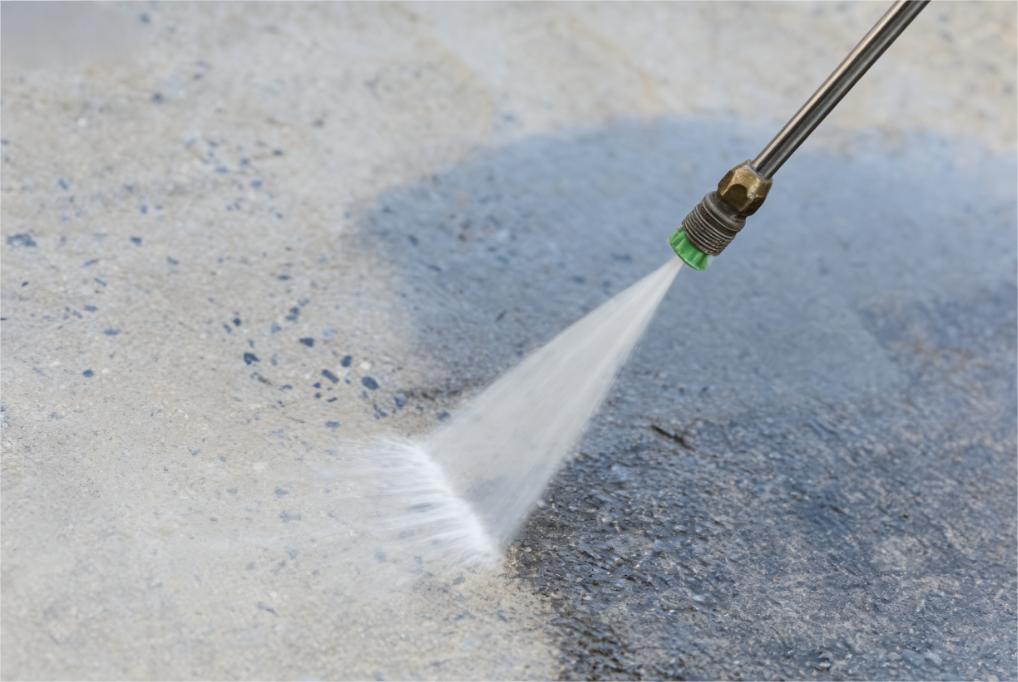
How to Choose the Right PSI for Cleaning Concrete?
PSI (Pounds per Square Inch) – this determines the “punch” of the water. For concrete surfaces, the required PSI will be determined entirely by the age of the surface and the amount of buildup.
Light-Duty Cleaning (1,500 – 2,000 PSI)
This range of pressure is best suited for performing routine maintenance on relatively new or well-maintained concrete surfaces. At 1,500 to 2,000 PSI, you can rinse away loose debris, pollen, and surface-level dust from your patio or pool deck. This pressure range is the safest for “green” concrete (concrete poured in the last year or so, before it reaches full strength and is still very susceptible to scarring).
Medium-Duty Cleaning (2,500 – 3,000 PSI)
The pressure level of this equipment is usually applicable to most residential driveways and sidewalks. This level of pressure is usually more than adequate to remove organic growth that has started to grow in the pores of the concrete. However, there is a greater risk of etching at this level, and it is recommended to use a 25-degree or 40-degree nozzle.
Heavy-Duty Cleaning (3,000 – 4,000+ PSI)
In industry settings, it is recommended to use at least 3,000 PSI or more to achieve “restoration” as opposed to “cleaning.” This level of pressure is necessary to remove old paint, garage floors with oil and grease stains, and large commercial parking lots. However, at this level of pressure, there is a great risk of damaging the concrete, and it is recommended to use a surface cleaner attachment as opposed to a wand to spread the pressure evenly and at a set height above the surface.
Machine Types: Gas vs. Electric Pressure Washer
The choice between gas and electric is not just about power sources; it is about efficiency and “cleaning units” (PSI x GPM).
Gas Pressure Washers
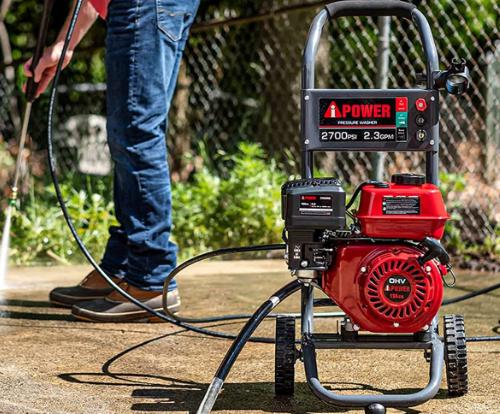
Gas pressure washers are the standard for the industry for working with concrete. They usually have more GPM (Gallons per Minute), and it is arguably more important than PSI for large surfaces. Although a higher pressure rating indeed breaks the bond of the dirt, it is equally true that a higher GPM rating flushes it away. Gas pressure washers start at 2,800 PSI and go way beyond. They are mobile, have no cords, and are designed for long-term use over many hours.
Electric Pressure Washers
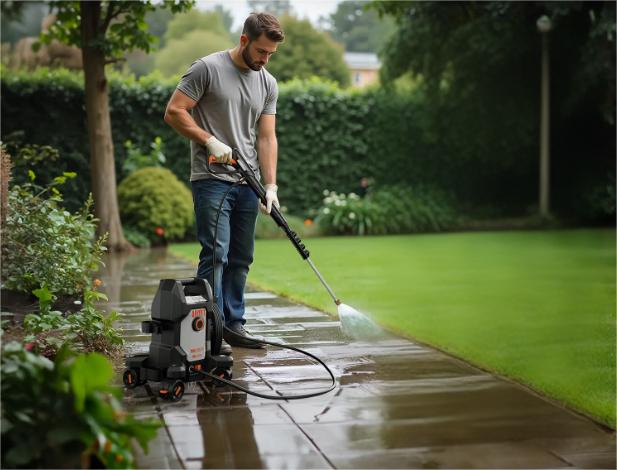
Electric pressure washers are valued for their portability and maintenance simplicity. These are great for small patios and patio furniture cleaning, but are lacking in “flushing power” because of lower GPMs than gas units. For a standard two-car driveway, an electric unit may take twice as long as a gas unit because the cleaning path of each stroke is narrower.
Practical Techniques for Cleaning Concrete Effectively
To clean concrete without leaving “zebra stripes” or damaging the edges, mechanical protocols are as follows:
- Preparation and Pre-treatment: Never use only water as a pre-treater for concrete stains. Use a pH-neutral concrete cleaner or a degreaser for oil spots. Allow it to dwell on the stain for 10-15 minutes without drying. This will chemically break the stain’s molecular bond.
- Nozzle Selection: The 25-degree nozzle is best suited for concrete cleaning. The 0-degree nozzle should never be used on concrete as it acts like a laser and will easily cut concrete surfaces.
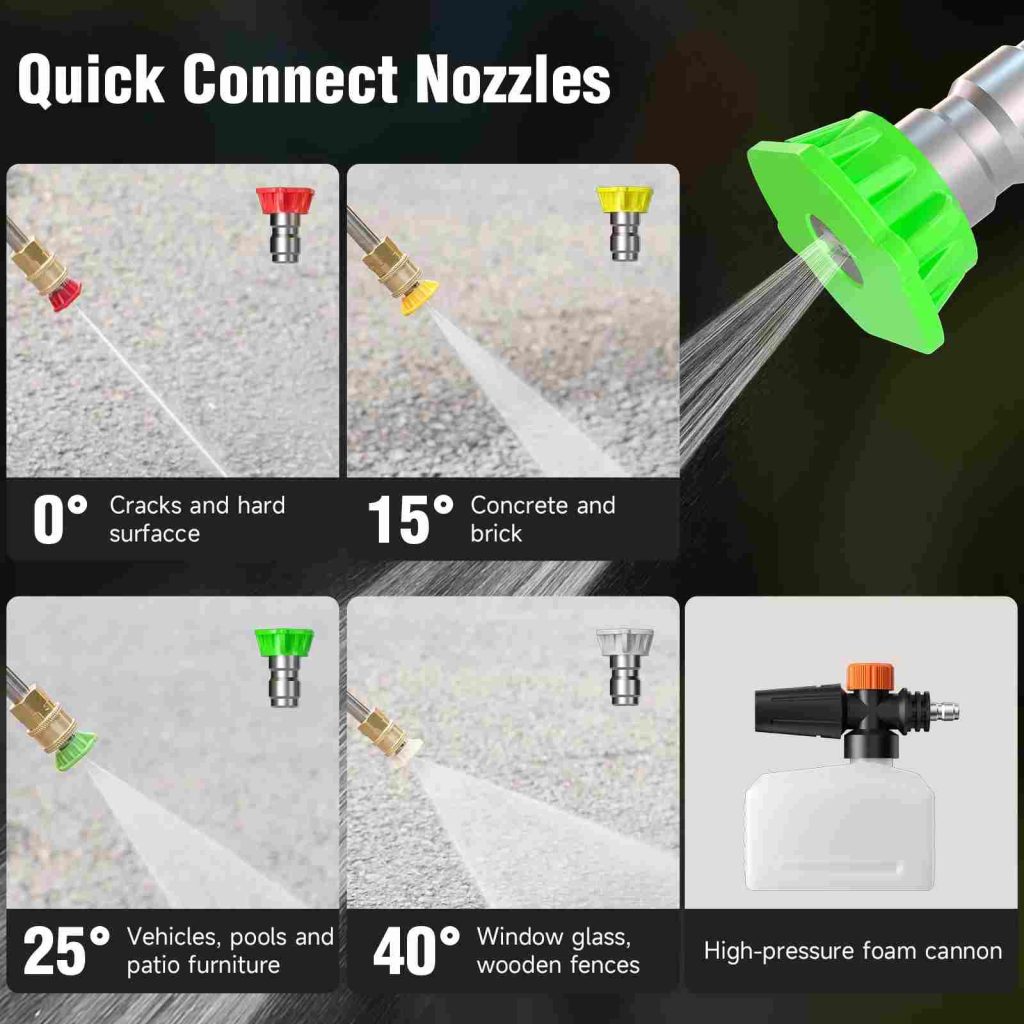
- The Sweeping Motion: The wand should be held 10 to 12 inches away from the surface. A sweeping motion should be employed. If the wand is held stationary when the trigger is pulled, a permanent mark will result.
- Use a Surface Cleaner: The surface cleaner is better than the wand for driveways. It has two rotating nozzles in a dome, which keep the nozzles at a constant height from the ground, thus preventing any streaks and protecting the concrete from damage due to user error.
Can Electric Pressure Washers Clean Concrete Effectively?
The short answer is yes, but with caveats. An electric pressure washer is effective at cleaning residential concrete surfaces as long as your objective is to clean dirt and organic slime off of them. However, it will not be effective at:
- Deep Oil Stains: The electric pressure washer will not have enough force to get through oil stains that have soaked deeply into the concrete.
- Large Surface Areas: Because of the lower GPM flow rate, you will have to move the wand much more slowly in order to achieve the same level of cleanliness.
- Old Paint/Sealer: Most electric units will not have the force required to remove existing strippers or paint.
The high-end electric unit will be sufficient for the average homeowner with a small patio or one-car driveway. However, for larger areas, the efficiency of a gas-powered unit is needed.
Key Takeaways for You
- For cleaning concrete, the appropriate amount of PSI must be matched to the dirt and staining
- For light-duty cleaning, 1,500 to 2,000 PSI is appropriate, but for medium-duty cleaning, 2,500 to 3,000 PSI is recommended
- High PSI must be used with caution and only when needed
- Gas-powered pressure washers are powerful and quick, but electric washers are convenient and allow for control
- Technique, cleaning agents, and patience are just as important as the power of the machine
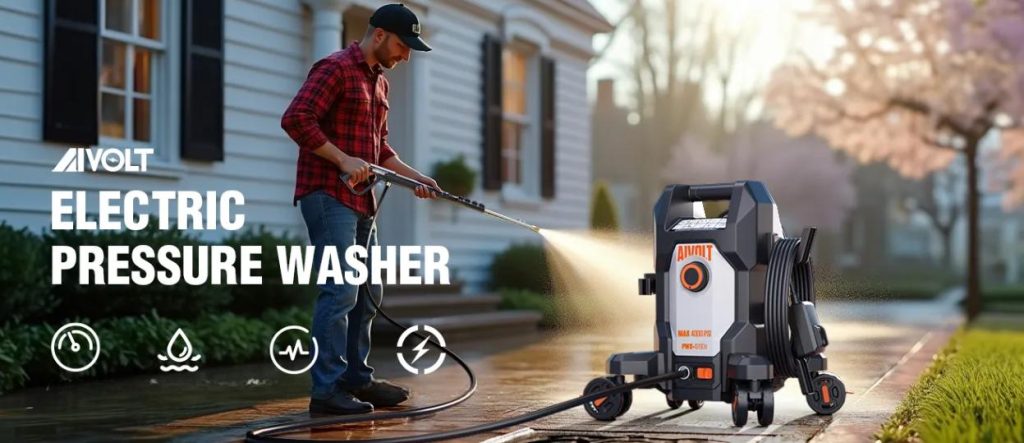
For reliable and durable electric pressure washers, you can look at the range of products that AIVOLT offers. Our pressure washers are made for reliable performance for cleaning concrete surfaces while ensuring efficiency, safety, and ease of use. Whether you want to clean your driveway, patio, or walkway, AIVOLT offers practical solutions for both home and professional use. You can visit the website of AIVOLT and find the pressure washer that meets your cleaning requirements.