
Can You Run a Generator in the Rain? (Safety Tips & Solutions)
Power outages often occur during heavy rains, leaving many wondering: can I run my generator in the rain? The short answer is “yes”–with proper protection in place. Running a generator outdoors poses severe risks–from electric shock to equipment damage–so it is vitally important that one understand why using generator in wet conditions may be risky as well as knowing the appropriate steps if ever need be.
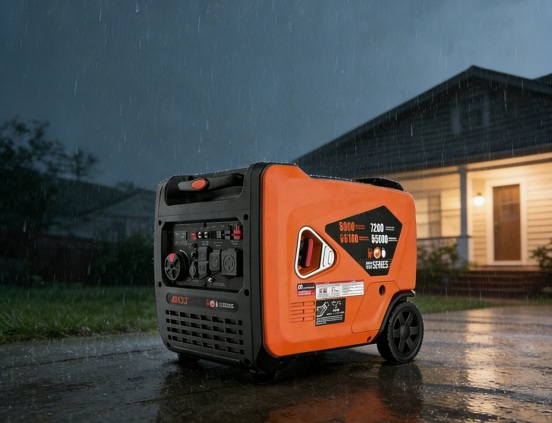
Why You Shouldn’t Run a Generator Unprotected in the Rain?
Operating a generator unprotected during rain is an extremely hazardous venture, with two primary risks that require your attention:
Electric shock is an ever-present risk with generators, as rainwater acts as a conductor of high voltage electricity that could leak into outlets, wiring and the generator’s internal components if exposed to rainwater. A light drizzle could allow raindrops to seep into outlets, wiring and components of a wet generator posing an imminent hazard that puts both you and your family at risk of serious electric shock or electrocution from touching wet cords on this unit.
Second, water damages critical equipment. Rainwater infiltration causes corrosion, short circuits and permanent damage to generator engines, alternators and electrical systems – leading to immediate failure or costly repair bills in the future; repairs often cost as much as new units! Moisture also inhibits fuel combustion efficiency reducing efficiency further and leading to unexpected power outages at times when they’re needed most.
How to Safely Run a Generator in The Rain?
Generators become safe to operate during rainy conditions when proper safety measures are followed. The following rules should be followed to decrease threats while maintaining consistent electricity supply:
1. Choose a Dry, Sheltered Location
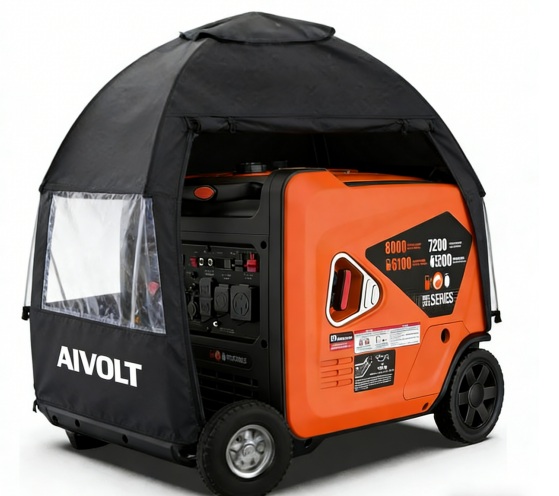
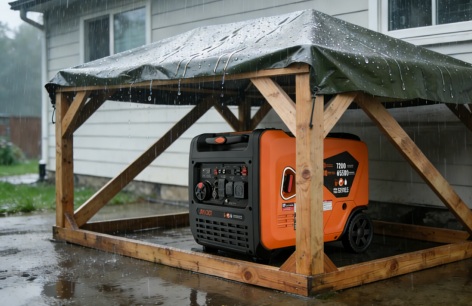
The safest option is to place your generator in a dry space—like a garage, shed, or covered patio—with proper ventilation (critical to avoid carbon monoxide buildup). The absence of indoor facilities requires users to construct an outdoor weatherproof structure through a temporary solution which needs a robust frame constructed from wood or metal and covered with a tarpaulin or generator-specific canopy to build a roof that hangs over the equipment. The shelter needs to maintain a minimum distance of 3 feet from all walls and windows and any other flammable objects.

2. Use Generator-Specific Waterproof Gear
The use of plastic and non-breathable materials for generator covering should be avoided because these materials create heat buildup which leads to equipment failure. Instead, invest in:
- A custom generator rain cover: Designed with ventilation slots to allow heat escape while repelling rain.
- The waterproof electrical connections require weatherproof GFCI outlets which need all cord junctions to be sealed with waterproof tape or junction boxes.
- Insulated tools and gloves: People should wear rubber-soled shoes together with insulated gloves when they need to handle cords or operate the generator.
3. Follow Proper Placement & Operation Rules
The generator requires installation on a raised level surface which should be constructed with materials like a wooden pallet.
The generator must maintain open airflow throughout its operation because carbon monoxide which has no smell poses deadly risks which make it unsafe to fully close the generator.
The generator must be shut down during severe weather when rain becomes a downpour or thunderstorms commence. You should wait until the weather conditions become calm before you restart the system.
Special Considerations for Different Generator Types
Not all generators have the same waterproof needs—adjust your approach based on your unit:
| Generator Type | Core Rain Protection Tips | Key Precautions |
| Portable Gasoline | Use custom rain cover; seal fuel tank tightly | Avoid refueling in rain; keep fuel away from shelter |
| Diesel | Check fuel tank for water buildup; secure the unit | Prevent tipping in winds/flooding |
| Inverter | Use manufacturer-approved rain cover | Avoid heavy rain; don’t block ventilation |
Portable Gasoline Generators
Because gasoline has high flammability properties, people need to practice extra safety measures. All fuel containers need to remain closed and secure when stored at a location outside the building. The generator needs a secure fuel tank cap to stop water entry into the tank. Do not refuel during rainfall, but if it becomes necessary, you must turn off your generator and wait until it reaches full cooling.
Diesel Generators
Diesel generators show better durability than other systems but they remain prone to water damage. The fuel tank needs water testing because diesel and water separate which causes water to accumulate at the tank’s lowest point. The unit needs secure fastening which protects it against tipping during strong winds and flood conditions.
The electronic parts of inverter generators face higher chances of sustaining water damage because they contain delicate components. The only solution for rain protection requires users to apply manufacturer-approved rain shields because generic solutions will obstruct air movement. Inverters should not operate during heavy rain conditions, but they function better when used during light drizzle with suitable protective measures.
Common Mistakes to Avoid
Every person who wants to do good things will make these particular errors which create disastrous results.
Mistake 1: Using plastic sheeting to wrap the generator: The method creates an effect which keeps heat inside the system leading to multiple dangerous fire safety situations.
Mistake 2: Running the generator in a closed garage (even with a window open): The system creates dangerous conditions because carbon monoxide gas develops at an accelerated pace which results in carbon monoxide poisoning.
Mistake 3: Plugging/unplugging cords with wet hands: The correct procedure requires you to dry your hands before handling electrical equipment while wearing protective gloves.
Mistake 4: Ignoring water damage signs: The generator requires immediate shut down when it starts to sputter because of a burning odor and visible rust damage.
Can You Run a Generator in the Rain? Only if you consider safety first with a suitable shelter, waterproof equipment, and with care. The risks–electrocution, equipment damage, and carbon monoxide poisoning–are too high to cut corners. By adhering to the tips here to keep your home running and your family protected during storms. Be aware that if you aren’t sure be patient and just wait for the rain to be over. Your safety is more important than temporary power.
Regular maintenance is also beneficial. When you use your generator after a rainy day Dry the generator completely, Check for the buildup of water and examine the cable connections for any damage. A properly maintained generator will last you for a long time regardless of the weather.
Looking for a reliable inverter generator? Click this link to explore your options.